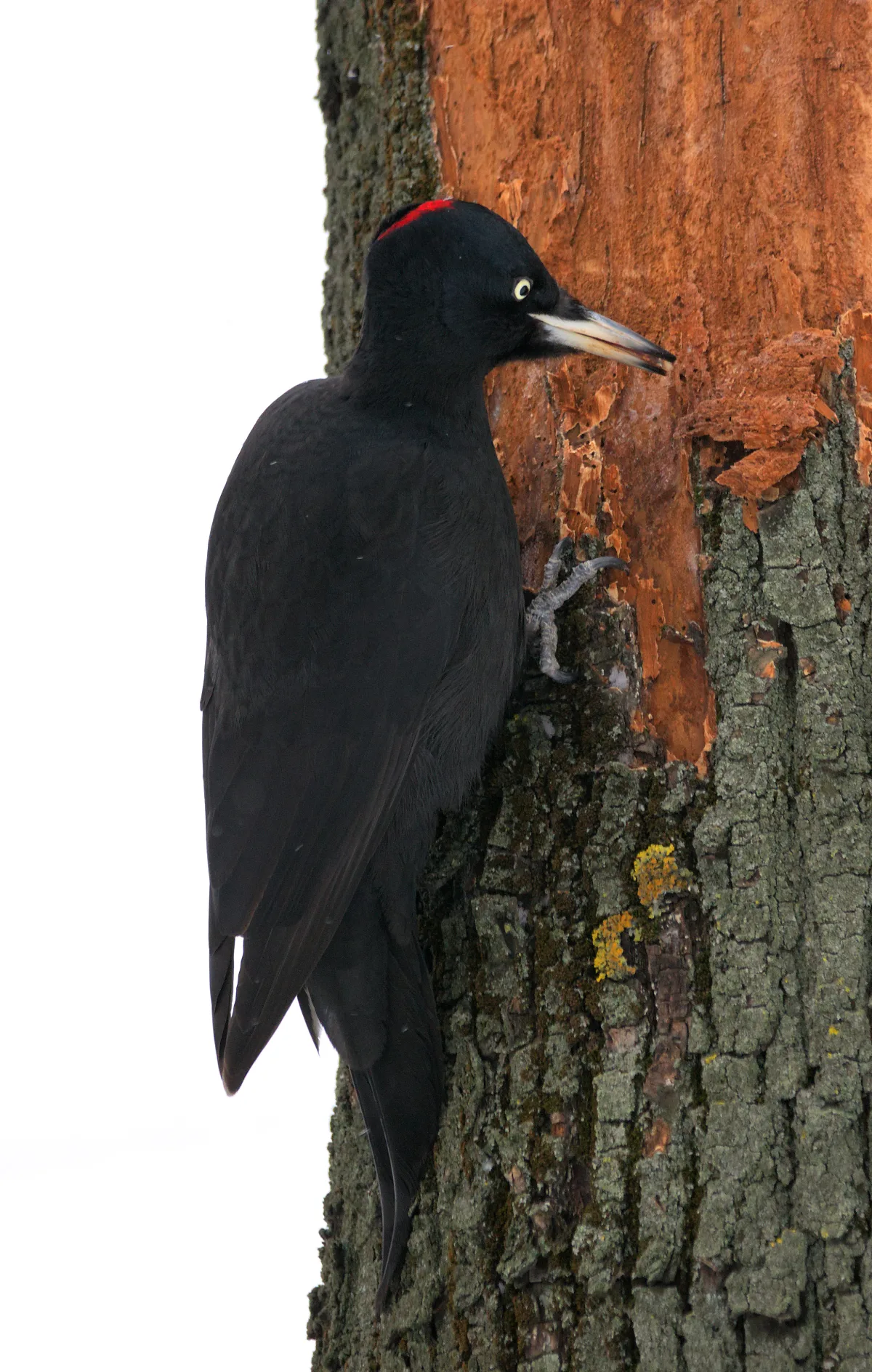
BirdPicidae
Black Woodpecker
Dryocopus martius
- Habitat
- Mature beech and pine forest with large-diameter trees; requires extensive home range
- IUCN status
- LCLeast Concern
- Wingspan
- ~68 cm
Ecological relationships
Nests in
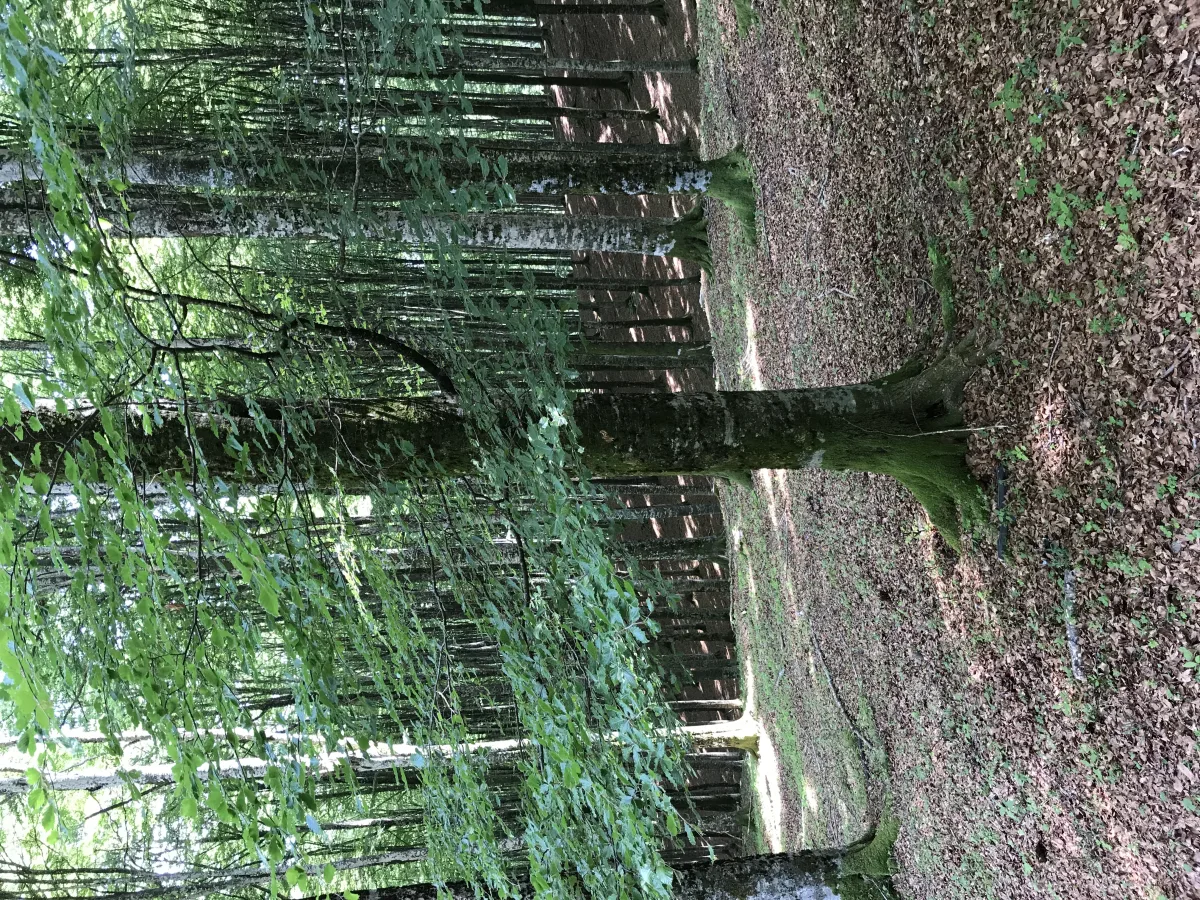 European BeechFagus sylvatica
Primary nest tree in Central and Western European beech forests; preferentially selects trunks with heartrot from Fomes fomentarius.
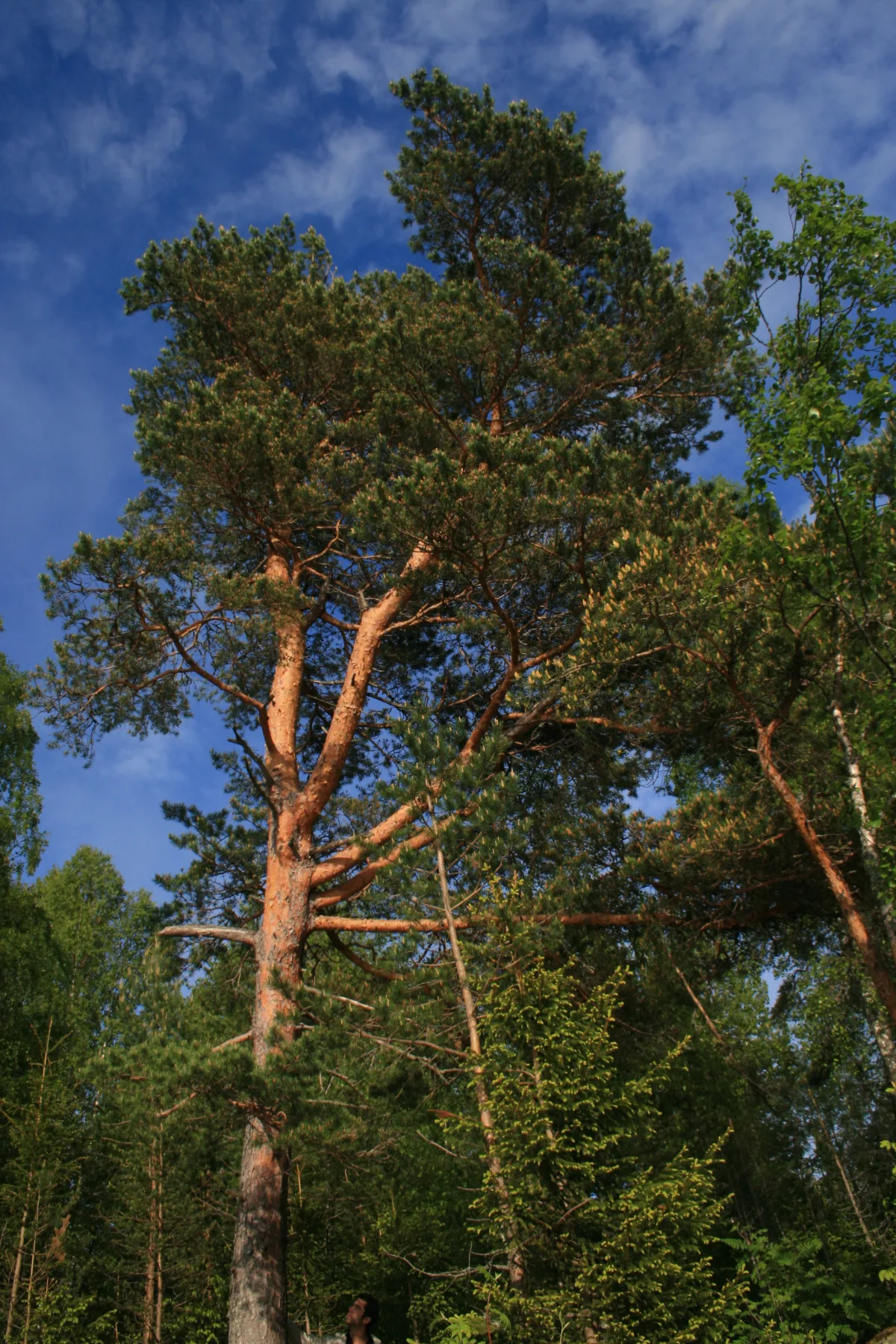 Scots PinePinus sylvestris
Primary nest tree in boreal and eastern European pine forests.
Feeds on
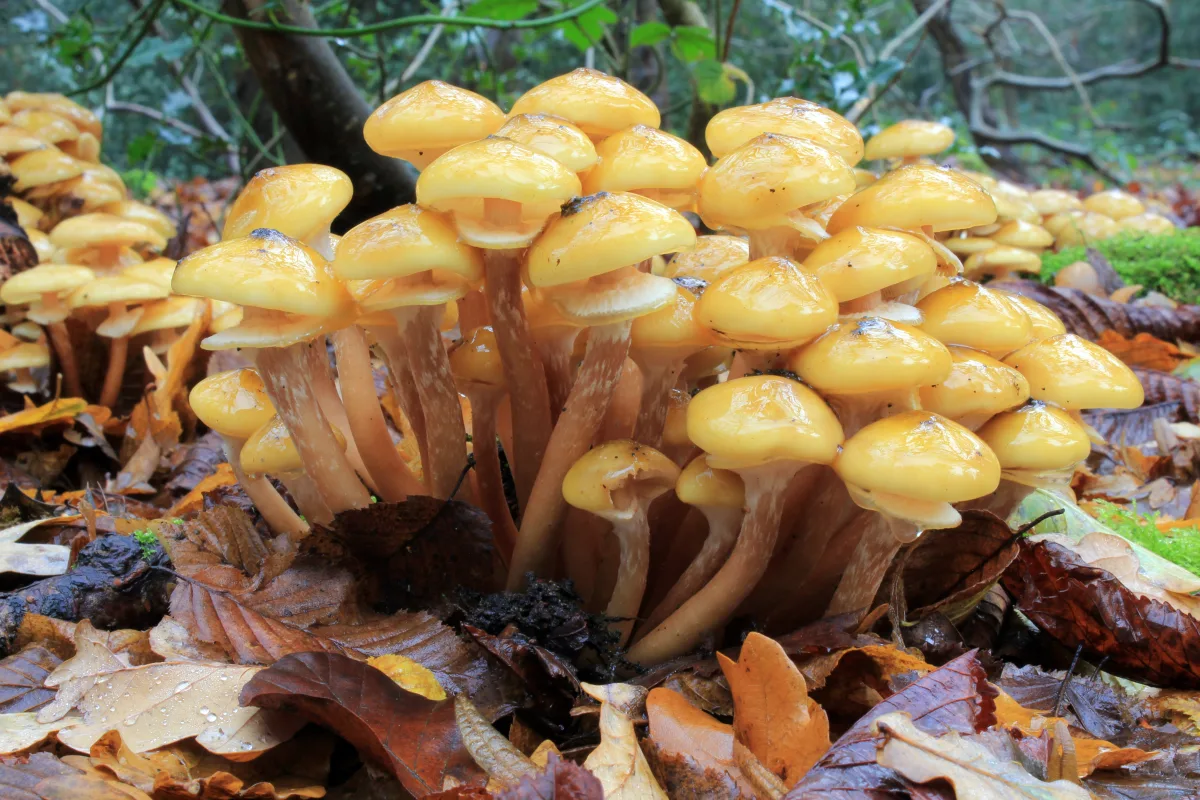 Honey FungusArmillaria mellea
Forages on wood colonised by Honey Fungus, feeding on both the fungal tissue and associated beetle larvae.
Symbiosis with
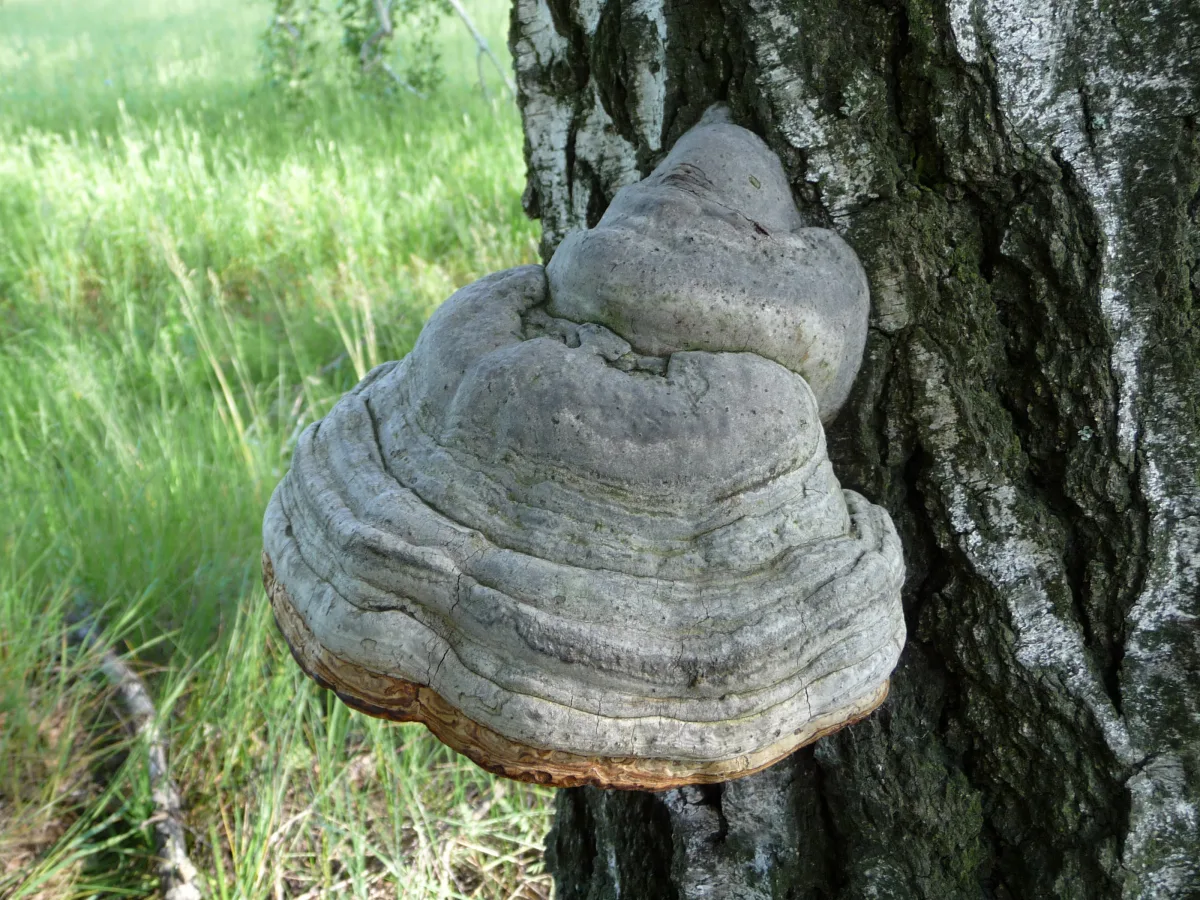 Tinder FungusFomes fomentarius
Preferentially nests in Beech trunks infected with Tinder Fungus. The fungus softens heartwood while the bird's cavity promotes further fungal colonisation (Zahner et al. 2012).
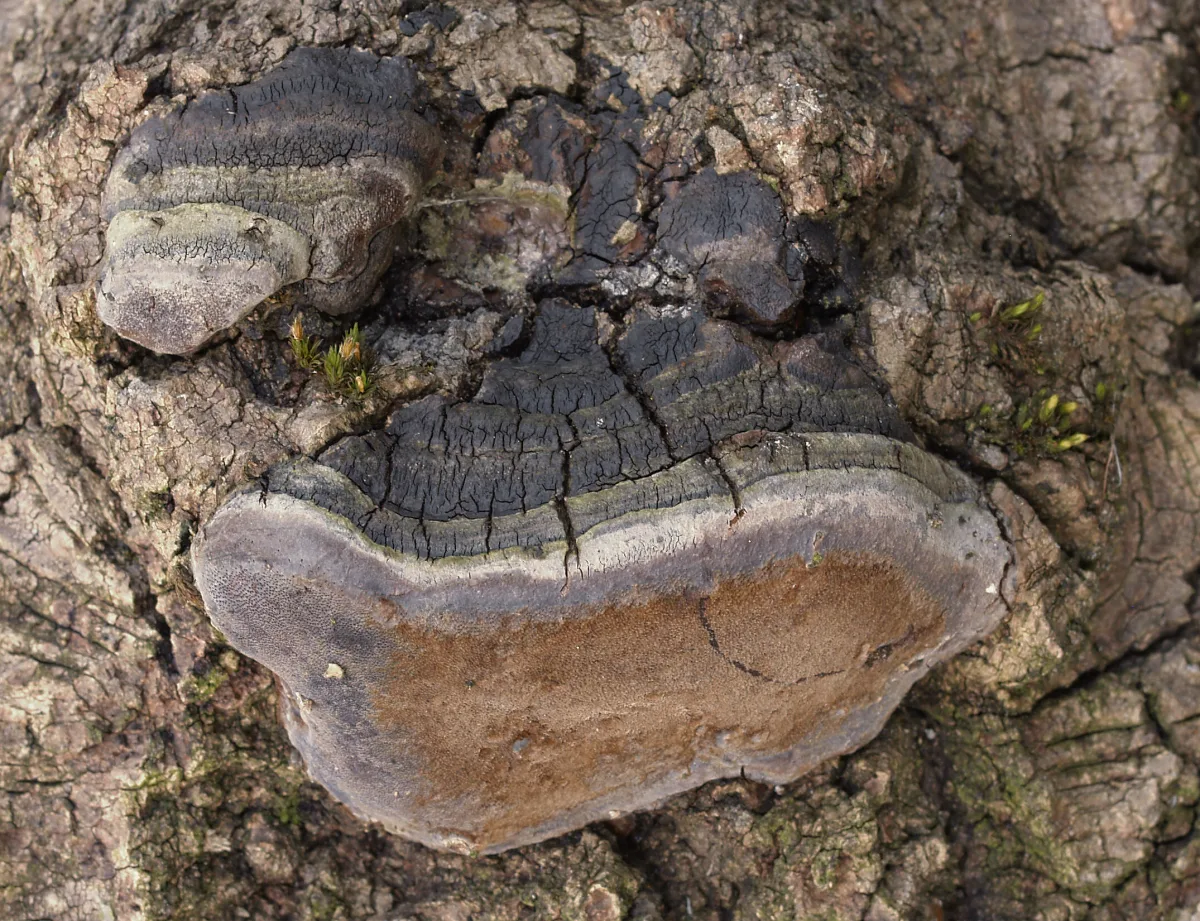 Aspen BracketPhellinus tremulae
Black Woodpecker preferentially excavates nest cavities in aspen trunks infected by this fungus; decay softens heartwood to enable excavation (Zahner et al. 2012).
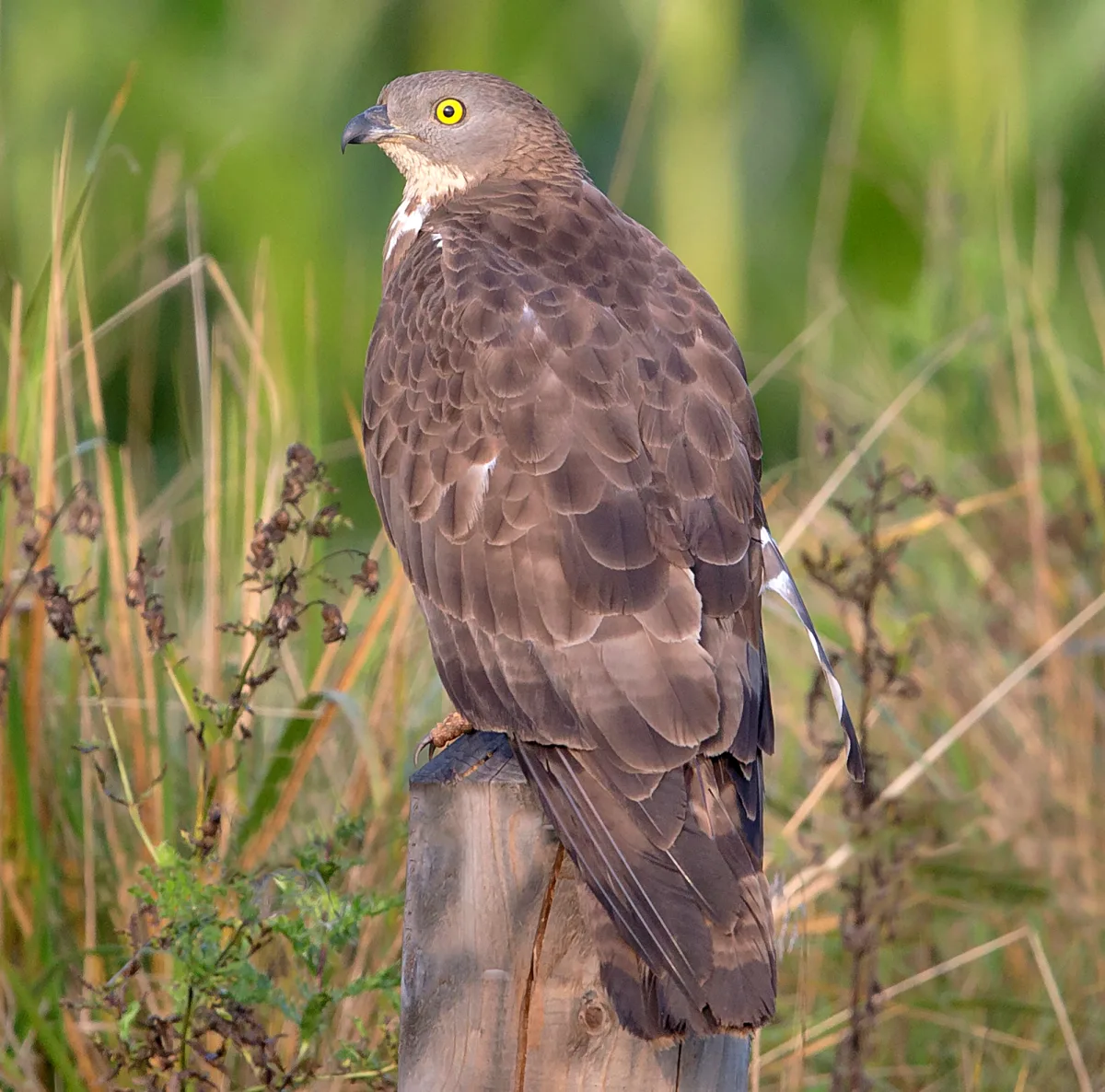 Honey BuzzardPernis apivorus
Frequently re-uses or nests near Black Woodpecker cavities in mature beech; commensal facilitation.