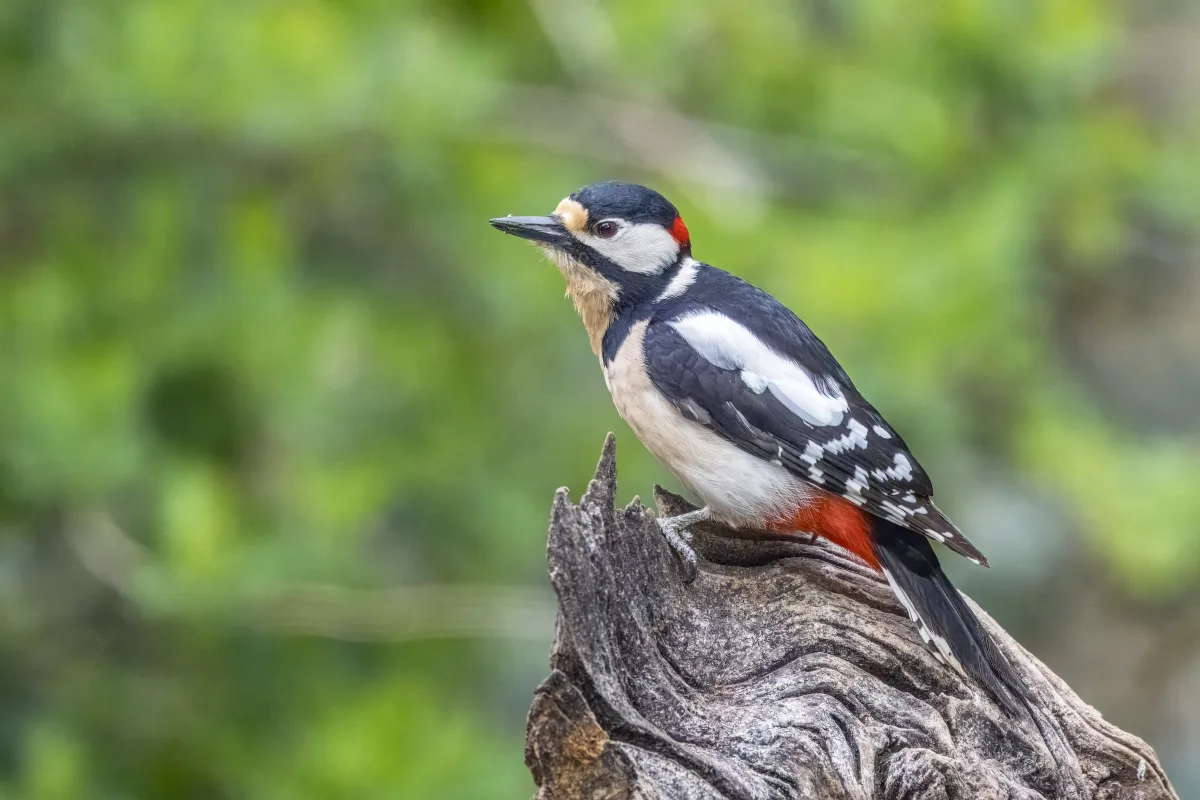
BirdPicidae
Great Spotted Woodpecker
Dendrocopos major
- Habitat
- Woodland, parks, gardens
- IUCN status
- LCLeast Concern
- Wingspan
- ~36 cm
Ecological relationships
Nests in
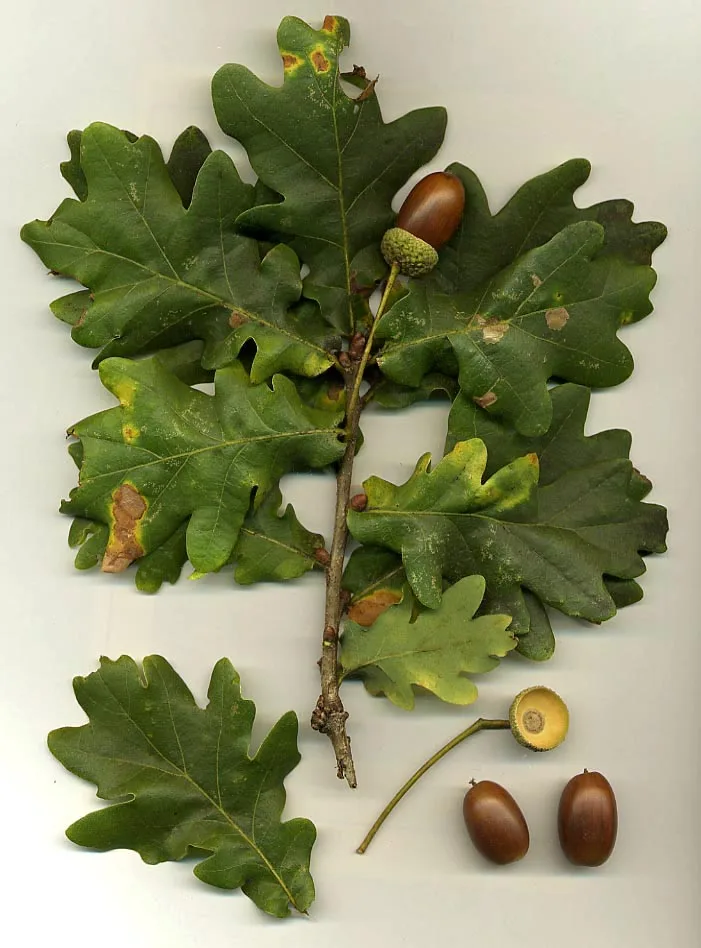 Pedunculate OakQuercus robur
Excavates nesting cavities in mature oak trunks.
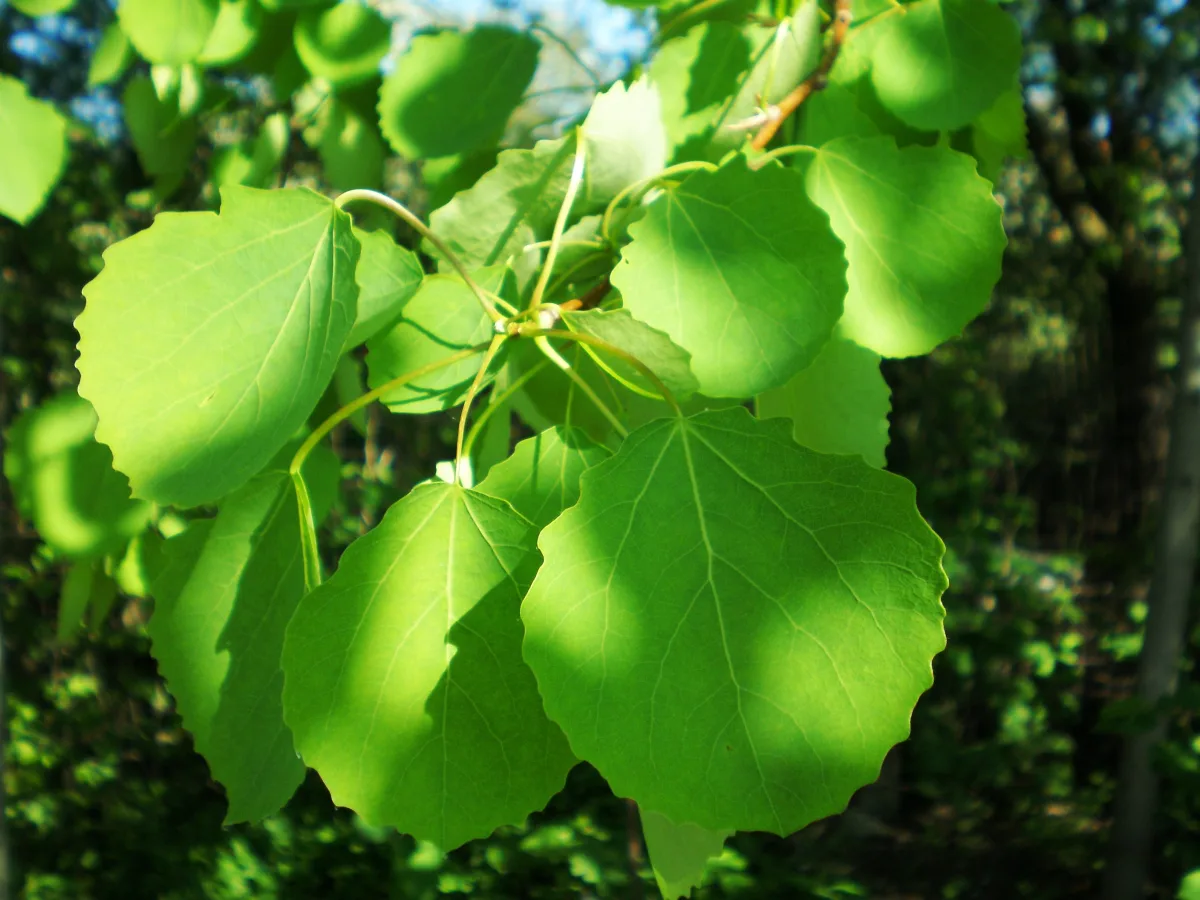 AspenPopulus tremula
Excavates nest holes in Aspen more readily than in oak. The soft, fast-decaying wood requires significantly less effort. Aspen stands are disproportionately important for woodpecker nesting density relative to tree abundance.
Feeds on
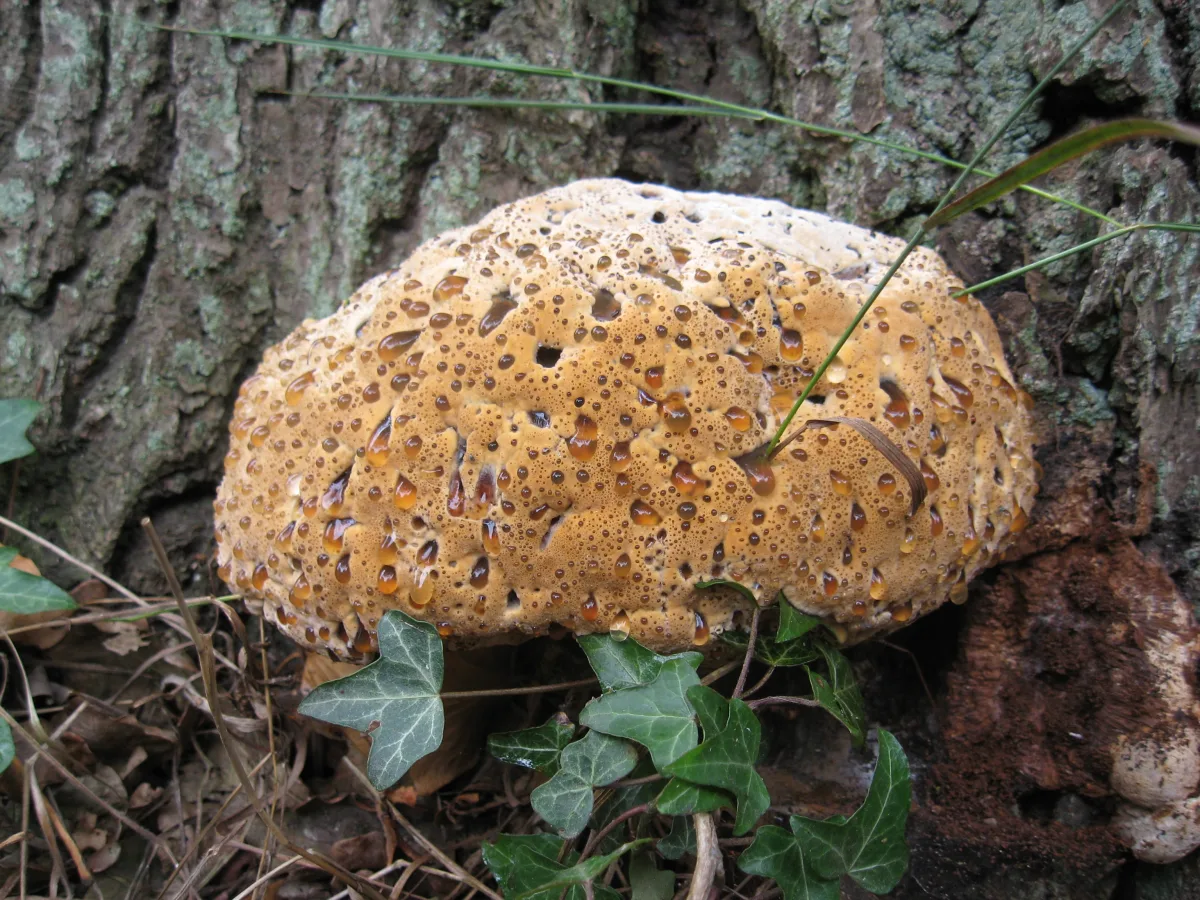 Oak BracketInonotus dryadeus
Excavates infected oak wood weakened by Inonotus dryadeus to reach beetle larvae. Bracket-infected oaks are disproportionately represented in woodpecker foraging sites.
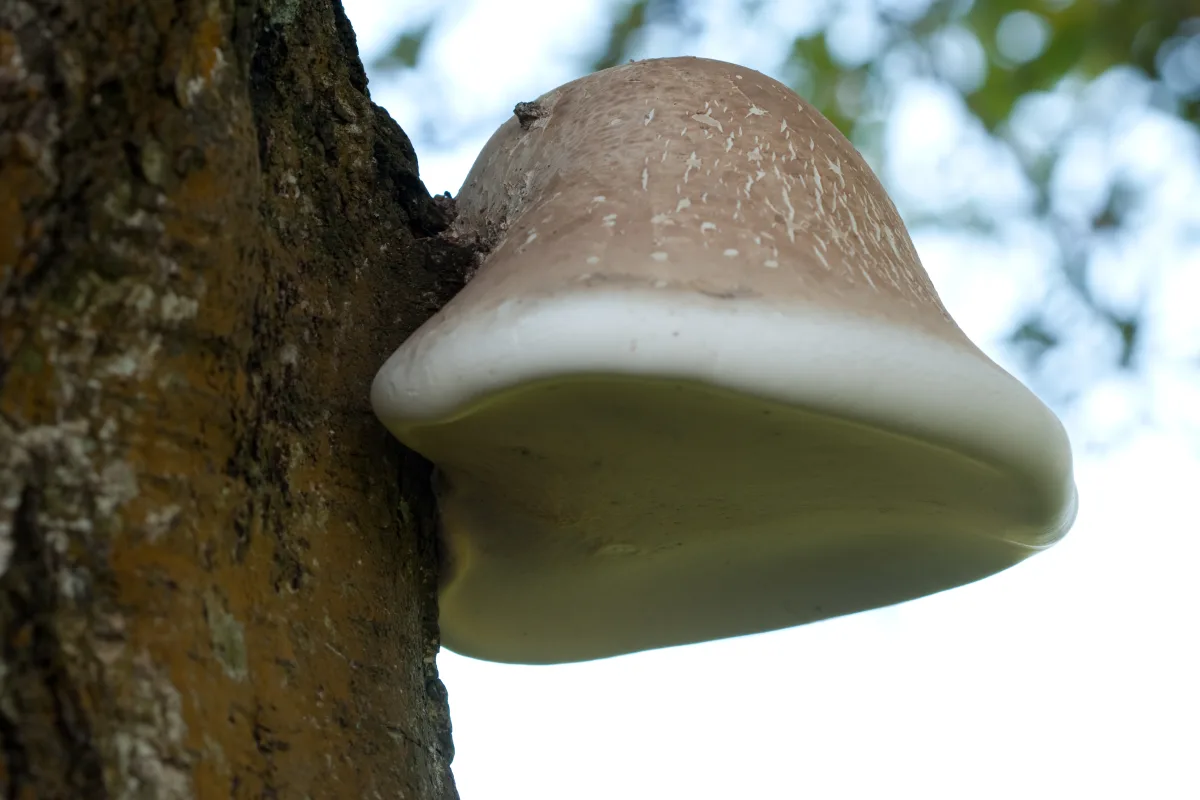 Birch PolyporeFomitopsis betulina
Preferentially excavates Birch Polypore-infected Birch trunks, where the brown rot created by Fomitopsis betulina softens the wood sufficiently for cavity creation. A documented three-way chain: Birch → Birch Polypore → Woodpecker.
Symbiosis with
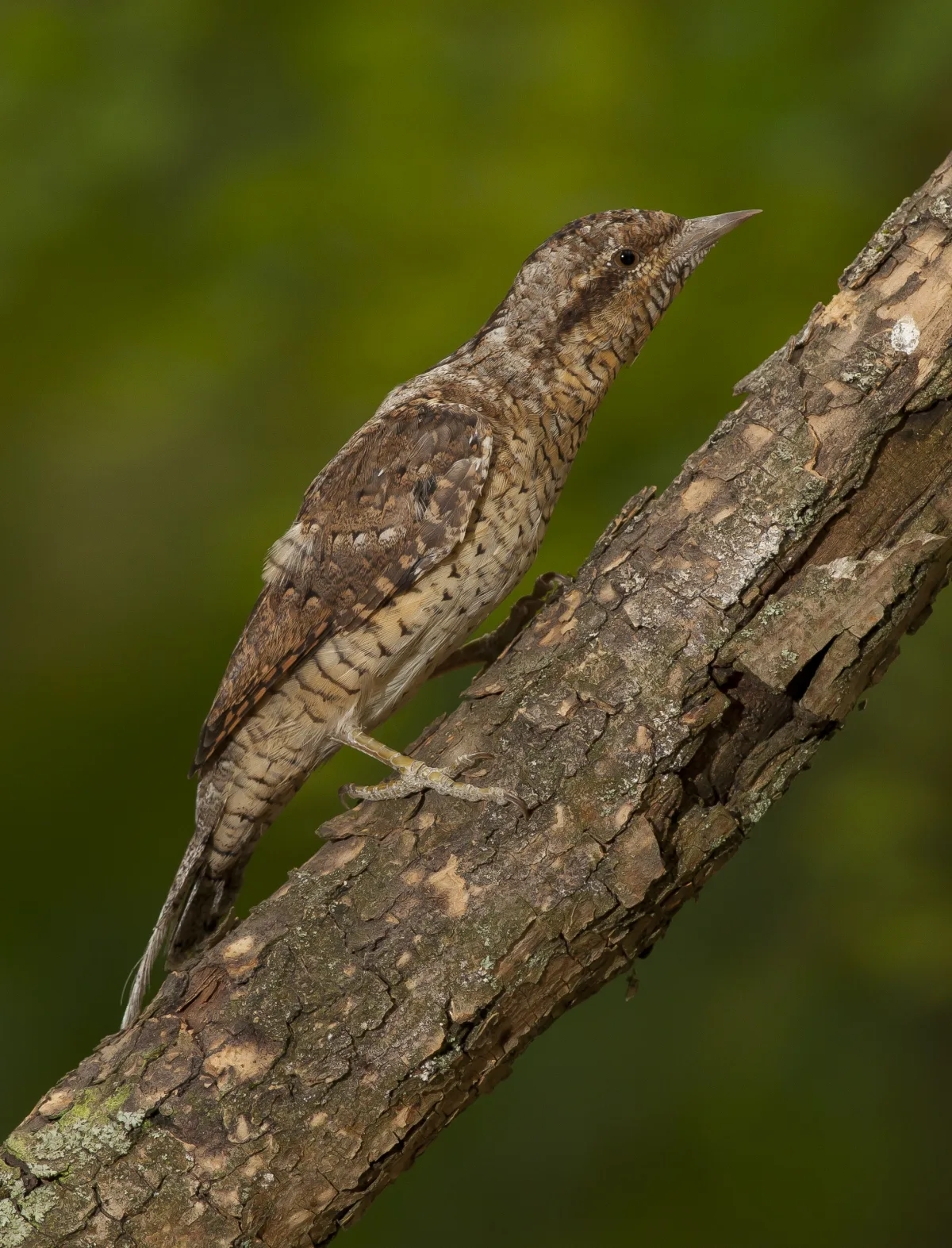 WryneckJynx torquilla
Depends on cavities excavated by Great Spotted Woodpecker; obligate commensal.
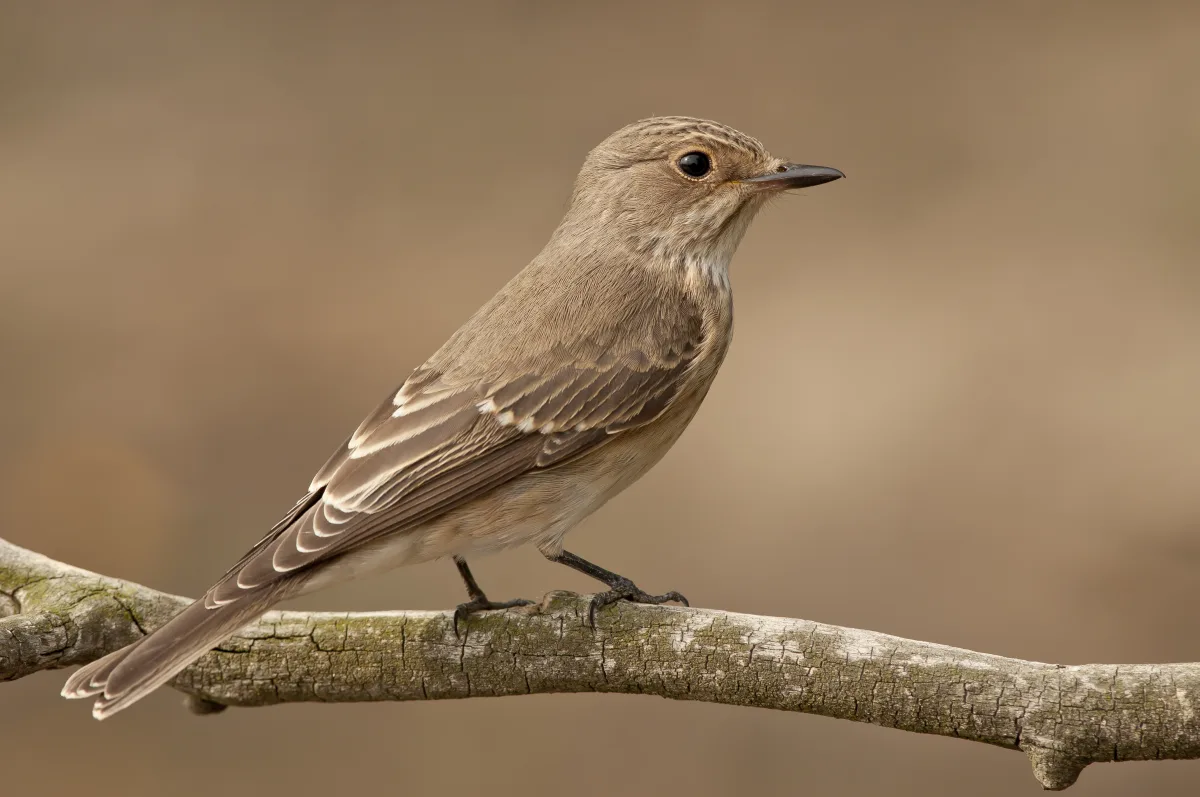 Spotted FlycatcherMuscicapa striata
Obligate secondary cavity nester relying on woodpecker-excavated holes.